

Suspension made better, without something else getting worse.
We’re used to trade-offs. More anti-squat means more pedal kickback. So better climbing generally means worse descending. This occurs because suspension layout is designed in respect of two very influential methods. Acceleration Anti-Squat, and Braking Anti-Rise.
At Auckland Cycle Works we realised that these methods simply aren’t all that they’re cracked up to be.
We’ve found a way to get the anti-squat just right. To get the suspension performance as good as any other design. But by moving the instant centre a long way backwards, we achieve zero degradation of suspension performance under braking. (Other designs lose 25 to 35% of their suspension performance under hard braking.)
The Auckland Cycle Works Marra is a 180mm travel bike that descends better than many 200mm DH race bikes, handles flat trails like a 160mm travel all-mountain bike, and climbs like a 140mm trail bike. Read the reviews. Get a test ride. This is real.
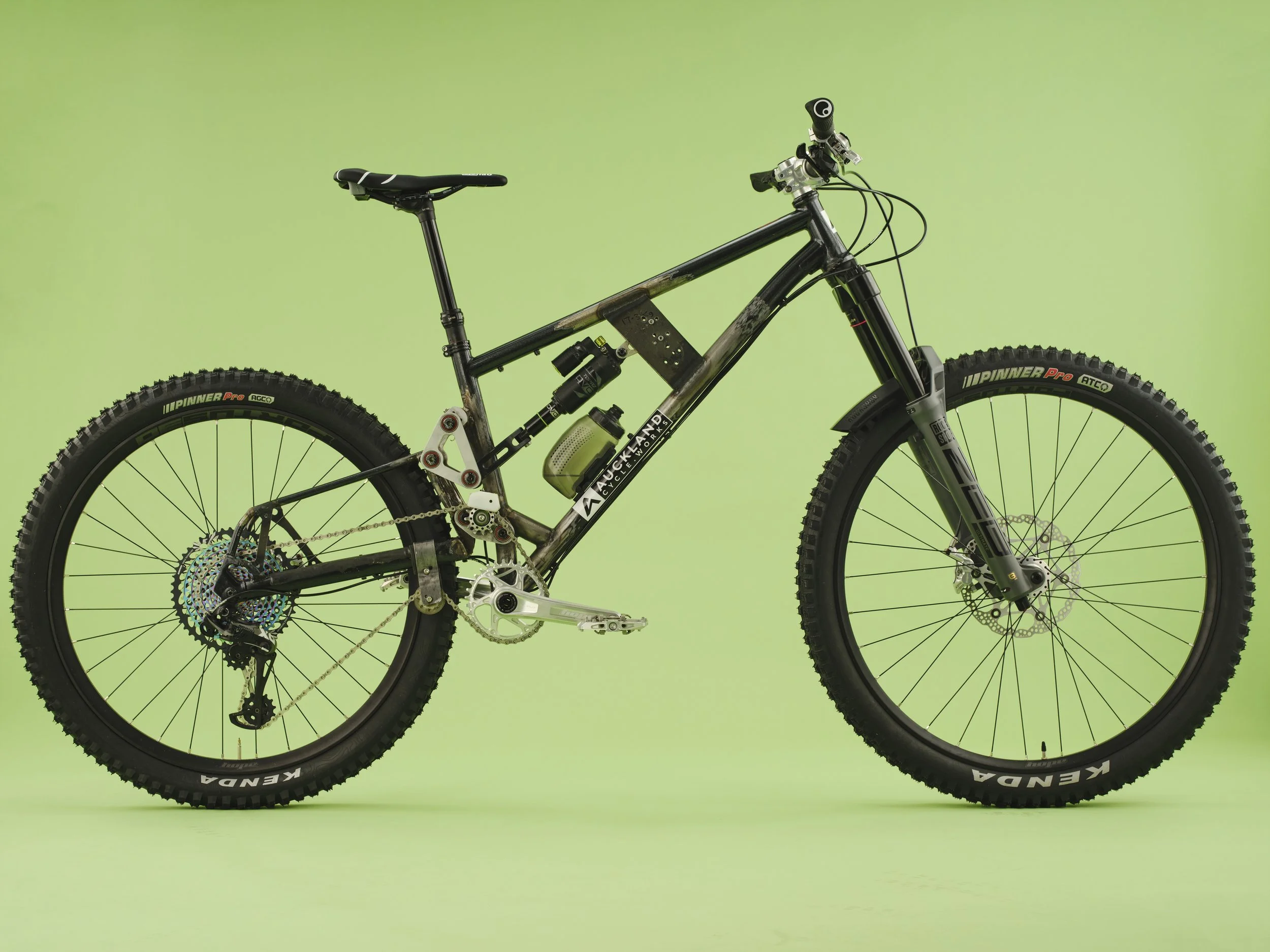
Photo: Adam Gasson/Bespoked
Gary started experimenting in late 2019, with designs that were as far away from normal as he could imagine, but which also explored his ideas about braking performance.
He built the first Marra prototype in 2022.
This first video shows how the axle path of Marra (at 2:29) is radically different to existing designs, but also note how much more the swingarm rotates as the suspension moves. These are the factors which make our KOLARP suspension concept so good.
Nobody else has experimented or built a bike even remotely like this, because the old theories say “no”.
But the old theory raises more questions than it solves.
If something seems too good to be true, then it probably is.
Or… If the calculation seems too neat and simple, then can we trust it to answer the complicated questions we’re trying to answer?
It’s not difficult to run a few checks.
This second video raises questions about the usefulness of the braking anti-rise calculation, and proposes a method for measuring the effectiveness of suspension action under braking.
The Auckland Cycle Works Marra delivers an incredible >25% improvement in suspension performance under hard braking. This is verified in our reviews. This video explains how this is achieved.
This third video raises questions about the way the chain-tension anti-squat is calculated, and suggests that if the height of the cassette is not allowed for, then the lines must be drawn in the wrong place.
In this video Gary makes a suggestion as to how the lines should be drawn, but this is just one small part of how total anti-squat would be calculated. If you’re interested to do a PhD on any of this, please get in touch.
So while the rest of the mountain biking world is trying to get a 2% improvement out of a theory that might at best only be 80% accurate, we’ve just cracked on with our own thing.
We can quantify the performance gains. But at the end of the day the numbers don’t matter, it’s the whole ride. Does every part of the bike come together to deliver the goods?
The reviewers say ‘yes’.
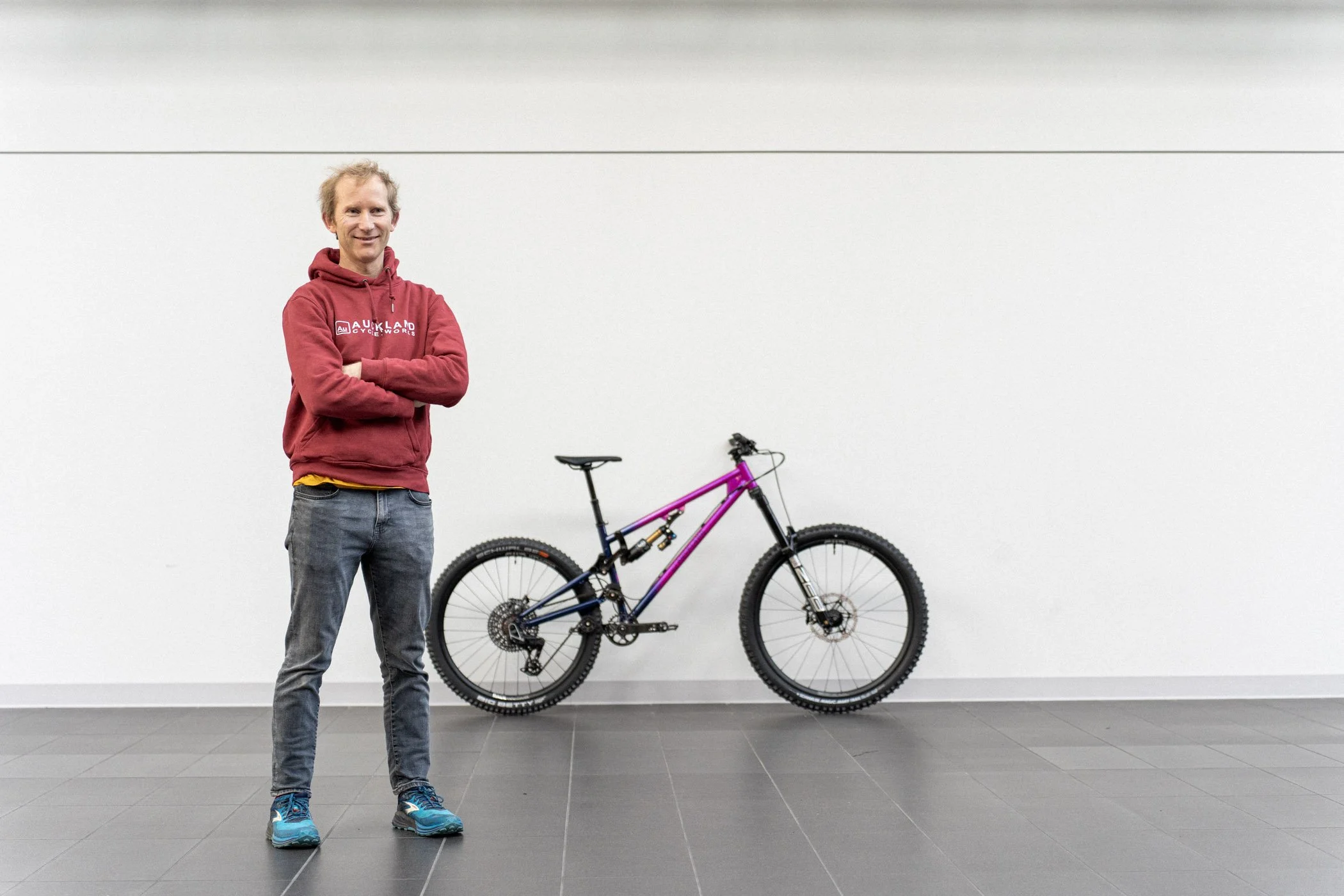
The existing theory has been useful and has served its purpose well. Things have now moved on.
Auckland Cycle Works, the Marra bike, and the KOLARP suspension concept, represent the very beginning of a paradigm shift in the way mountain bike suspension will be measured and developed.
If you are interested to buy a Marra or Reiver for your collection, or to abuse on the world’s most demanding tracks, please get in touch.
photo by Alexej Fedorov/Bespoked